
“Submerged” a review of Eva Meijer’s SEA NOW by Catherine Parnell
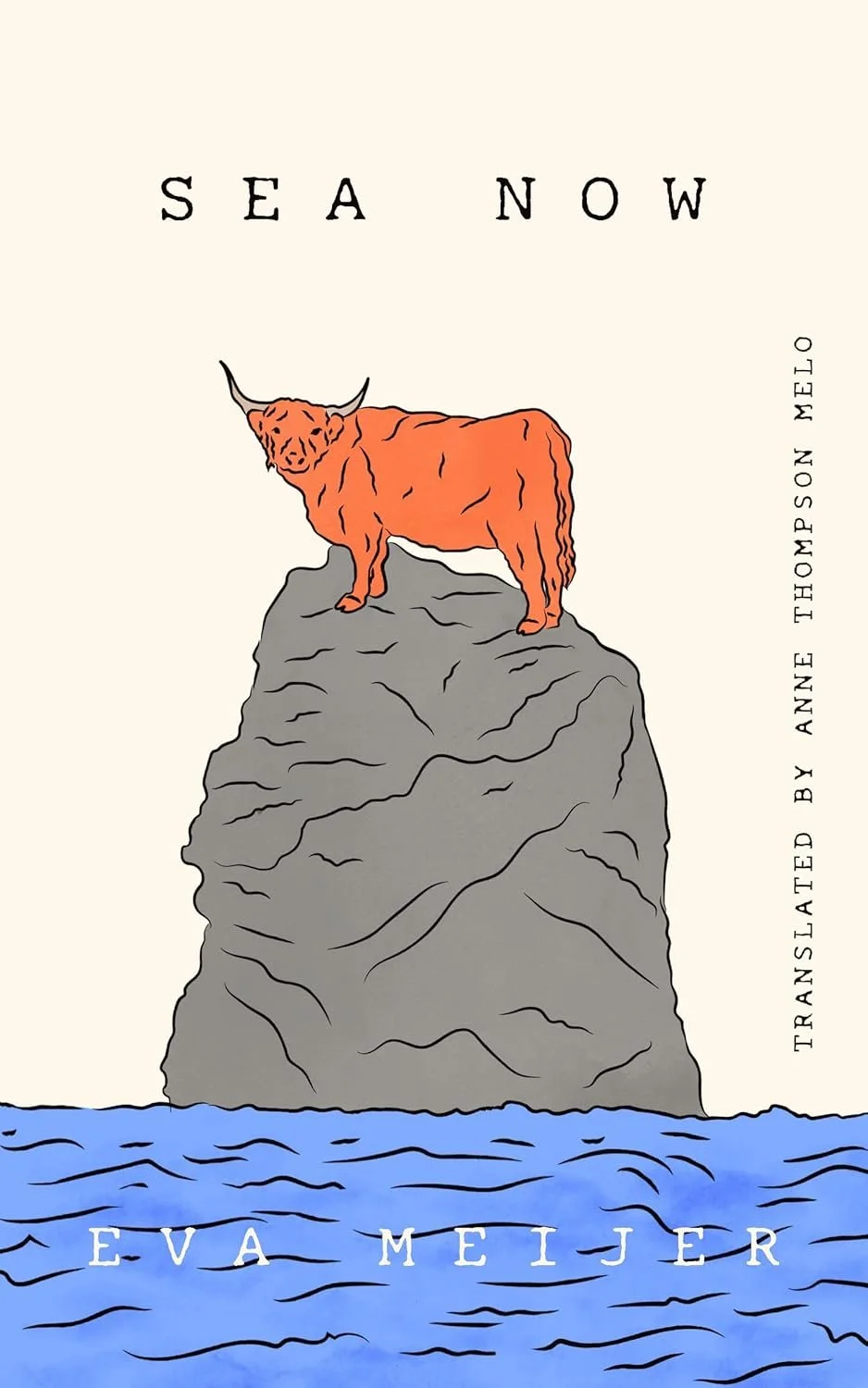
Sea Now
By Eva Meijer, translated from Dutch by Anne Thompson Melo
Two Lines Press / Peirene Press, 2025
180 pages
The rise of ecolit and its passion for the environment charts a direct line between the world in which we live and what may well be an apocalyptic future. It’s abundantly clear that we, the inhabitants of Planet Earth, have created an untenable ecological situation, one that we’d better work on yesterday. Consider, for example, the global prospect of rising waters that may wash over and submerge continents, countries, cities, towns, villages. Then pick up Sea Now by Eva Meijer, translated from Dutch by Anne Thompson Melo, a novel that explores how people struggle to survive an environmental disaster, unsure if a post-apocalyptic time is even possible. Tense and terrifying, the book hits all the right notes in sounding the alarm.
It begins simply, slowly, with the loss of tides and the solemn lap of the sea claiming coastal land in the Netherlands – and only the Netherlands – at the rate of a kilometer a day. Chaotic political, financial, and social pressures and proclamations minimize the danger. Experts warn of a worsening crisis. Protests erupt. A small – and soon to be extinct – group, “the remainers,” denies the dangerous watery onslaught, believing normalcy will return. But the normalcy of a throw-away society is at the root of the disaster. After decades, centuries if you will, of humankind polluting the ocean, using it as a trash can, the sea, anthropomorphized, is fighting back.
Sea Now commands attention through a point-by-point plotline focused on humans, animals, and elements in the natural world, all in response to the rising waters. This dystopian book’s allure is the accelerated, tense narration, removed yet intimate, sometimes snippy, and often pointing out absurdities. Animals and humans alike receive interiority as their thoughts swim across the page in their struggle to bolt and survive. Rabbits flee the rising waters, people end up in auto pileups as they try to escape. There’s humor that Ionesco would applaud: the fish “were finding it more tranquil than usual because the fishermen—apart from the odd fanatic—were staying on shore. They were still on guard, the fish, but it felt like a nice little break.” Meanwhile, those in charge bloviate “about compensation, payouts and scientific evidence,” all of it utterly meaningless in the face of annihilation. As the water submerges coastal cities and moves inland, Meijer takes her characters from denial to despair, “We think we’ve got time, but we haven’t.” Some characters take their lives, others persist.
While one of the ministers in charge of the whole shebang resembles a man from a Monty Python Silly Walk sketch, other characters are more compelling. Of note are three females. Are they heroes on a hero’s journey? Definitely. “Still expecting the best when faced with disaster is a gift humans have.” Arie is the activist who founds the protest group called “Sea Now!” hence the novel’s title, that functions as a call to readers beyond the fourth wall. Willow is a teen searching for her lost mother. Then there’s Steen, a dedicated scientist in search of her cat, lost when she flees the rising waters. Acknowledging that the sea speaks of increasing menace, the three join forces and set out on their missions – their hero’s journeys. Their heroism flares in their care and compassion for one another, and readers live their struggle as their boat slogs from one floating morass to the next: “And as life carries on, there’s this thing that cuts you adrift and leaves you adrift.” The losses mount up.
At that point, the prose darkens, and survival seems unlikely, not just that of humankind, but of plants and animals. In the hands of a less gifted writer and translator, readers might be tempted to weep, but what they must take away from Sea Now is that environmental disaster is creeping up on us. Salvation lies in science and action, not the dollar and denial. See? Now?
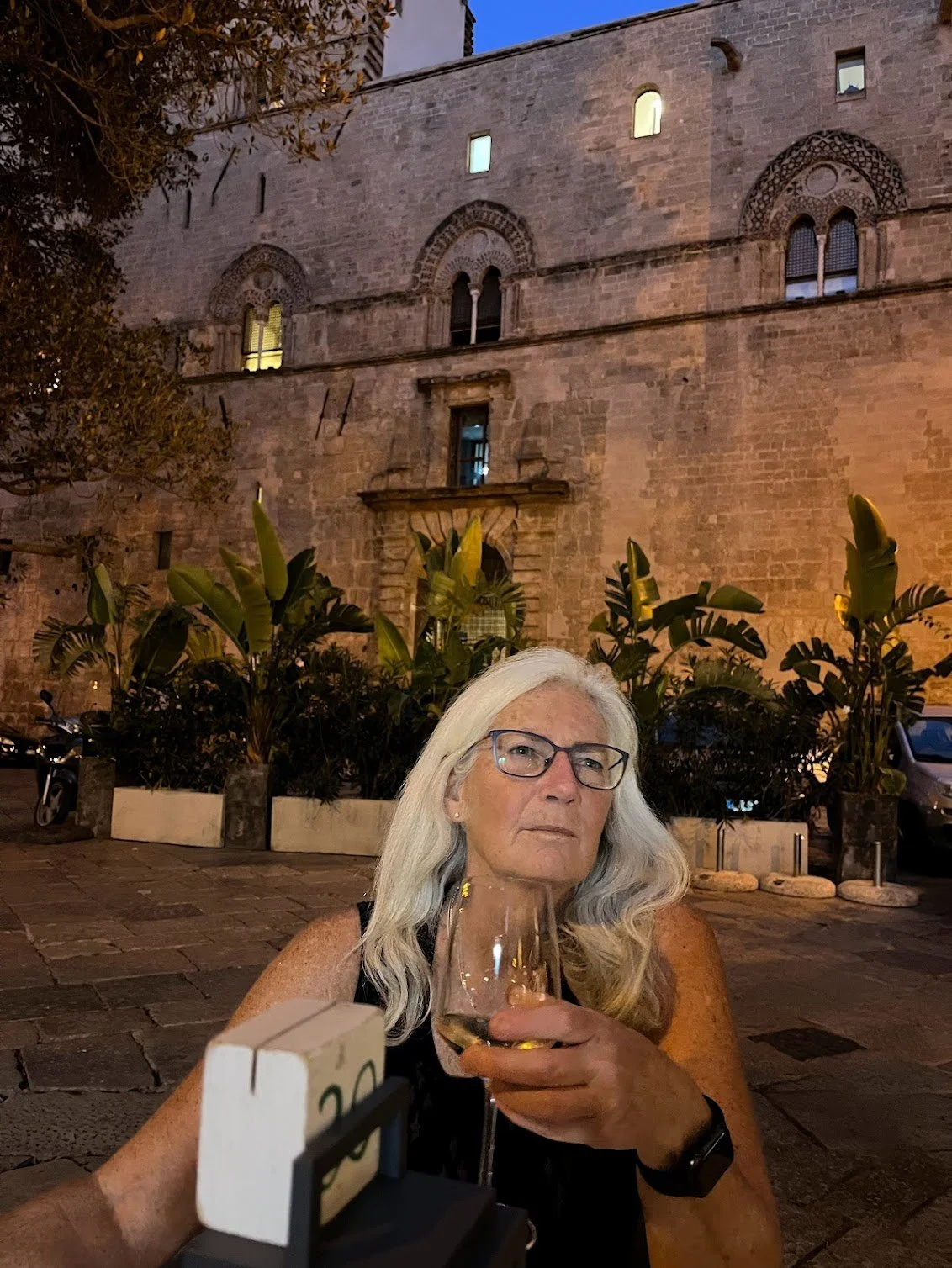
Catherine Parnell is a writer, editor, educator, and the Director of Publicity for Arrowsmith Press. She is co-founder of MicroLit and serves on the board of Wrath-Bearing Tree. Her publications include the memoir The Kingdom of His Will, as well as stories, essays, and reviews and interviews in The Compulsive Reader, Reckon Review, Five on the Fifth, LEON Literary Review, Cutleaf, Funicular, Litro, Heavy Feather Review, Mud Season Review, Emerge, Orca, West Trade Review, Tenderly, Cleaver, Free State Review, The Brooklyn Rail, The Rumpus, The Southampton Review, The Baltimore Review, and other literary magazines.