
“She wants to keep those secrets coming”: Allison Renner’s review of Apple & Palm by Patricia Henley
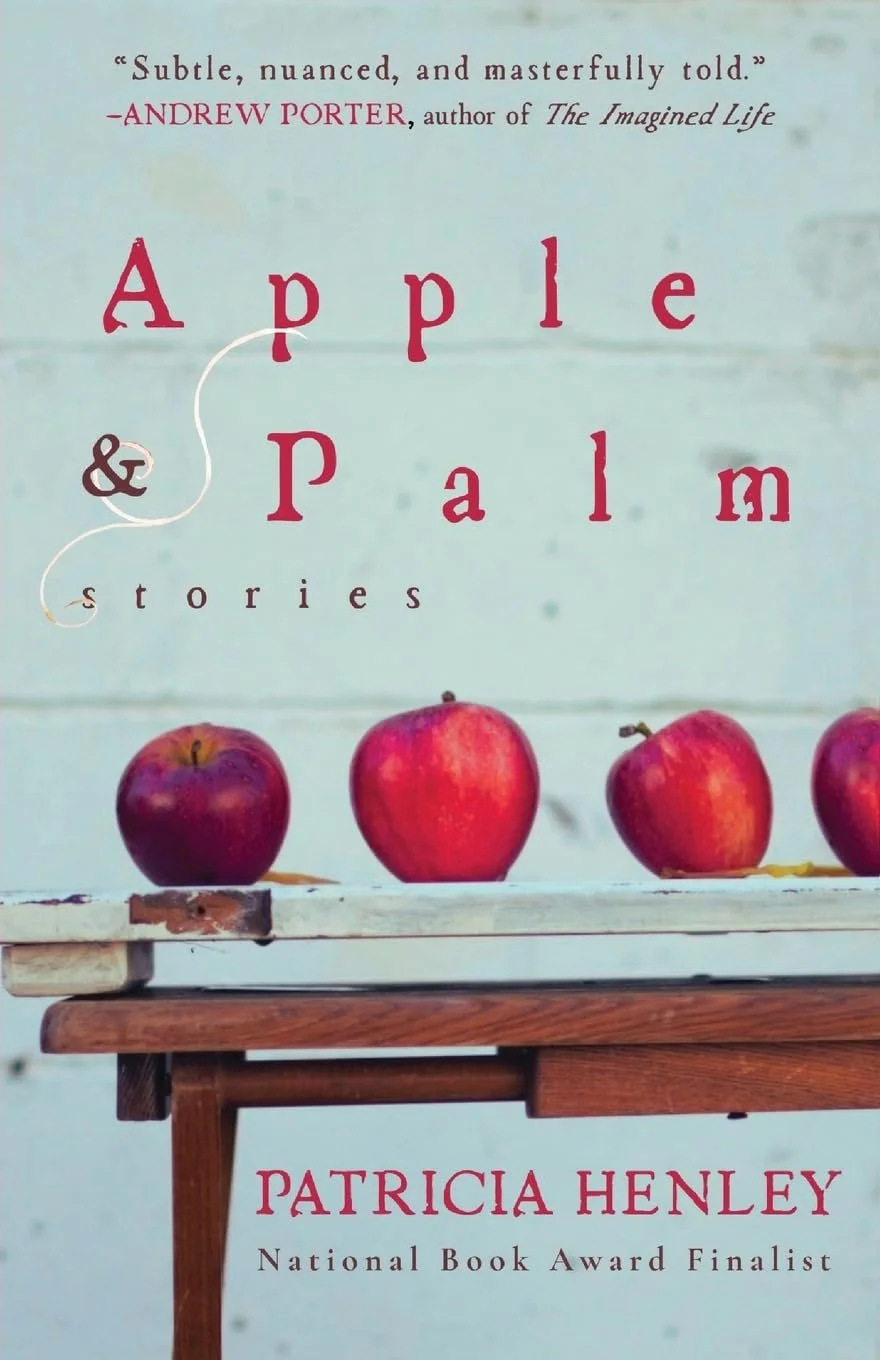
Apple & Palm
Patricia Henley
Cornerstone Press (March 2026)
174 pages
Though Patricia Henley’s Apple & Palm introduces a wide cast of characters, its true protagonist may be Whistle Pig itself. The town and its surrounding land form the connective tissue between stories, linking women across generations, families, friendships, and chance encounters. Certain landmarks reappear throughout stories, creating the sense that geography itself is responsible for bringing these lives together.
An artists’ retreat house populated by women “all related somehow,” the Happy Trails orchard, and other familiar locations function almost as communal spaces where lives overlap. The stories suggest that communities are built not only through family ties but through shared places, linked histories, and the relationships women choose to cultivate. Even the landscape is often described in feminine terms, reinforcing that place and womanhood are inseparable forces within these stories.
What makes the collection particularly compelling is its focus on female relationships. Mothers, daughters, granddaughters, sisters, in-laws, friends, lovers, neighbors, and even strangers form networks of support. Apple & Palm explores a wide range of experiences and identities, including asexuality, open marriage, and unconventional communities, but consistently returns to the idea that women create meaning through their connections to one another. Again and again, the characters find themselves leaving behind disappointing fathers, husbands, or lovers and discovering new ways forward through female companionship and self-reliance.
What struck me most was the way these relationships often transcend the boundaries readers might expect. Rather than centering jealousy, competition, or conflict between women, many of the stories emphasize empathy and solidarity. Women reach across social roles and circumstances to understand each other, sometimes forming bonds that prove more meaningful than their relationships with men. Friendships accumulate layers across decades, family histories echo through generations, and even relationships that could easily become antagonistic instead become opportunities for connection. The result is a collection that feels deeply invested in community—not just the community of a place, but the communities women build around themselves.
The writing itself is remarkable. Entire lives are compressed into a few pages, yet nothing feels rushed or overwhelmed by information. Instead, the prose is so vivid and precise that many scenes feel less like descriptions than memories the reader somehow already possesses. Whether capturing the details of a childhood home, a friendship that spans decades, or a hard-won sense of independence, Henley creates an emotional depth that lingers long after each story ends.
Reading this collection feels like a masterclass in descriptive writing. Henley has a rare ability to make physical spaces, objects, and people feel intensely lived-in. A single paragraph can evoke an entire lifetime, while a brief description can carry the emotional weight of years of experience. Her images are vivid without ever feeling showy, and they consistently deepen character rather than distracting from it. This collection demonstrates how description does far more than create atmosphere—it can reveal history, relationships, and the inner lives of characters with astonishing efficiency.
Ultimately, this collection is a celebration of women’s lives in all their complexity. By grounding its characters in a shared landscape while exploring the many forms that female relationships can take, it offers a moving portrait of resilience, community, and the different ways people find a place to belong. The collection suggests that belonging is rarely found through romance or traditional success alone. More often, it’s found through friendship, shared histories, chosen family, and the enduring connections that women develop with one another and with the places they call home.

Allison Renner’s fiction and photography have appeared in South Florida Poetry Journal, Ellipsis Zine, Six Sentences, Rejection Letters, Atlas and Alice, Misery Tourism, Versification, FERAL, and vulnerary magazine. Her chapbook Won’t Be By Your Side is out from Alien Buddha Press. She can be found online at allisonrennerwrites.com and on X @AllisonRWrites.