
Darkness Where Roots Keep Growing: A Review of Nobody’s Saffron by Yaryna Chornohuz
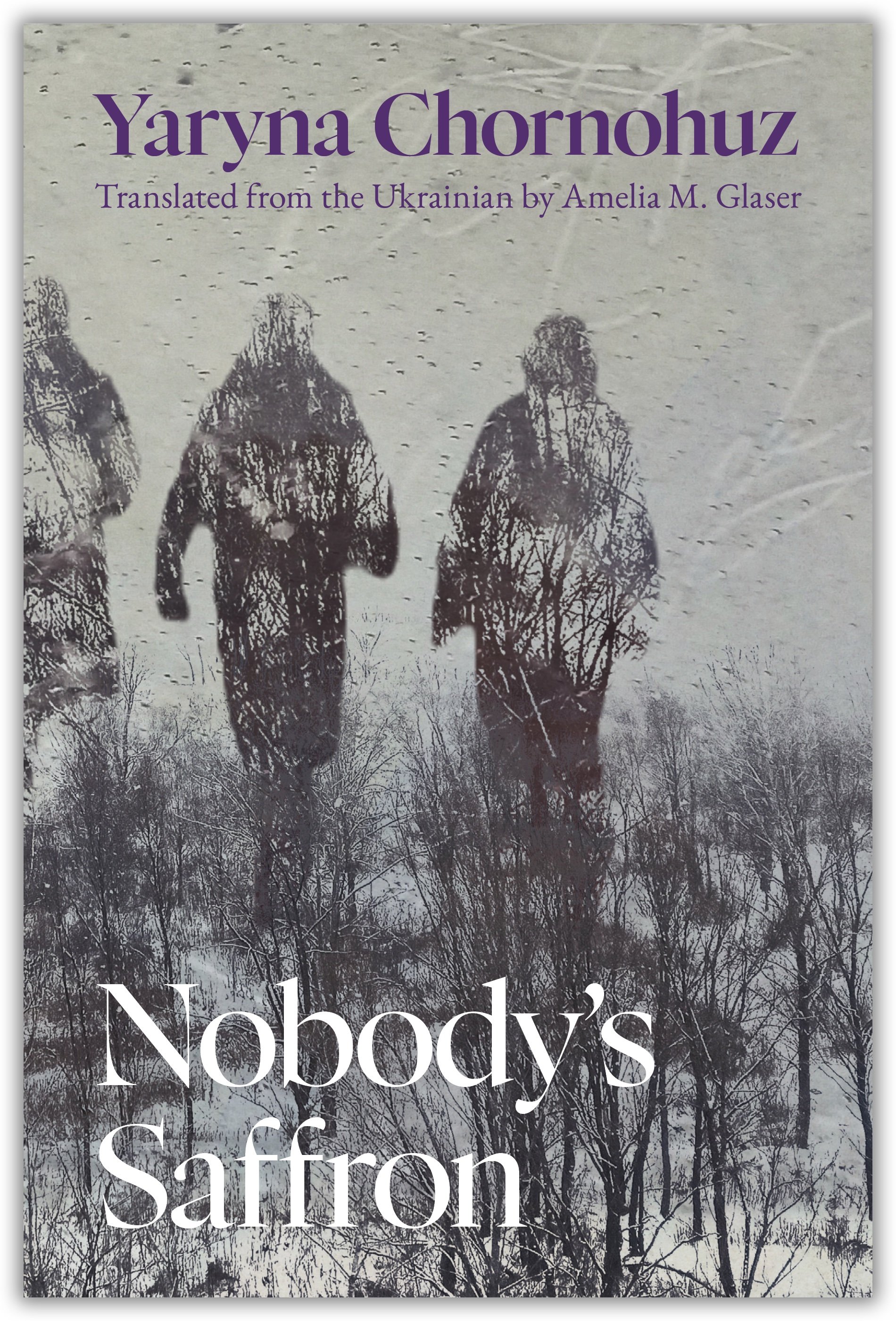
Nobody’s Saffron
Yaryna Chornohuz, translated by Amelia Glaser
Arrowsmith Press (September 2026)
In early September 2026, the Ukrainian poet and writer Yaryna Chornohuz traveled to London to participate in a panel discussion about the responsibility of literature in times of war. Soon she’ll be back on the front lines in her homeland, defending it against Russian advances. Writing is an important part of this defense, especially in the wake of Russian attacks on Ukrainian publishers and warehouses that destroyed 10 million books in August alone, bringing the total loss to an unfathomable level since 2022, when Russia began its full-scale invasion of Ukraine.
Nobody’s Saffron is Chornohuz’s third book of poetry about the ongoing Russian assault, and her second one translated from the Ukrainian to English by Amelia M. Glaser. The book presents each poem in both languages, side by side — a meaningful decision in light of Russia’s ban on teaching the Ukrainian language in occupied territories. The reading experience feels both like a real-time translation and the uncovering of a long-gone era. “Greetings to you from my time, / to those born after my death,” Chornohuz writes to future generations in her opening poem. She concludes the collection with the reminder that “descendants will come,” instructing them: “Don’t forget this short parable / told by hundred of our books, / written in our trenches, and just behind them.”
Between her salutation and plea, Chornohuz brings the reader into the kill zone, where she operates strike drones. With haunting lyricism, she describes the loneliness of war, the ever-presence of death, the dual forces of remembering and forgetting, the experience of being a woman in the military, and the distinct pain of leaving her daughter to fight. Here, war has become so deeply ingrained in daily life that, after the blare of an air siren, “children in their schools indifferently ran into shelters / decorated with painted flowers.” And in the book’s longest poem, “[a history of dictators],” she writes, “we, too, thanks to a decade-long war, / are now primitive people too, for whom it’s the norm— / natural to die of natural causes at twenty or thirty.” Each poem’s title appears in lowercase and in brackets to “show that my life is taken into measures” that encapsulate difficult experiences the way only poetry can, as Chornohuz explains in an interview with literary scholar Brent Shannon.
With heartbreaking clarity, she describes what it’s like to live where life once was. In a poem dedicated to two fallen comrades, she writes, “Death said to us / ‘Get up and take their place’ — / and so we did.” In “[saffron],” she describes the beauty of the purple flowers, noting, “this is what the dead won’t see, / this is what we will see in their place.” And in “[humanity]” she explains:
So here is humanity’s paradox:
that some stand still before another life
in another’s body,
ready at any moment to give their own life
for that life,
ready to move over at the table,
to make jokes before death and
after losing body parts
to love the final moment
and to love to live.
It seems impossible, this idea of loving the final moment, and yet Chornohuz writes of her people as a continuum that transcends individual lifespans through memory and literature, where death is just a part of a larger scope of existence. In “[elm]” she offers the tree as a metaphor in which the leaves represent those who are still alive and the roots are those who have died. She writes:
At the end, only to hope
that the roots will hear the leaves,
that the leaves, in the hour of sun and sharpness,
will see the darkness where, in secret,
the roots keep growing.
Readers sitting in the safety of armchairs on the other side of the world might feel far removed from the Russian genocide in Ukraine, but Chornohuz pulls us into conversation about it. In her search for “a song / to free me from pain,” she begs, “Sing it to me, world, / in one of those languages of the free world, / while we’re still here.” And in “[the game of genocide, russian-style],” she writes: “Come visit, … we’ll show you what it’s like to fight to the very end / for yourself. / and at the same time, inadvertently— / for the whole free world.” Chornohuz reminds us that no one can take freedom for granted. I feel this truth in my bones as my news feed tells me Russia might attack NATO member countries in the coming months.
To fight for Ukraine is to fight for democracy itself. Those of us who aren’t on the front lines can — and must — still do our part. Read the poems. See the darkness. Know that the roots keep growing.
***
For more information, please visit Arrowsmith Press. A launch event celebrating this book will be held on October 15, 2026. To livestream the event, please register here.
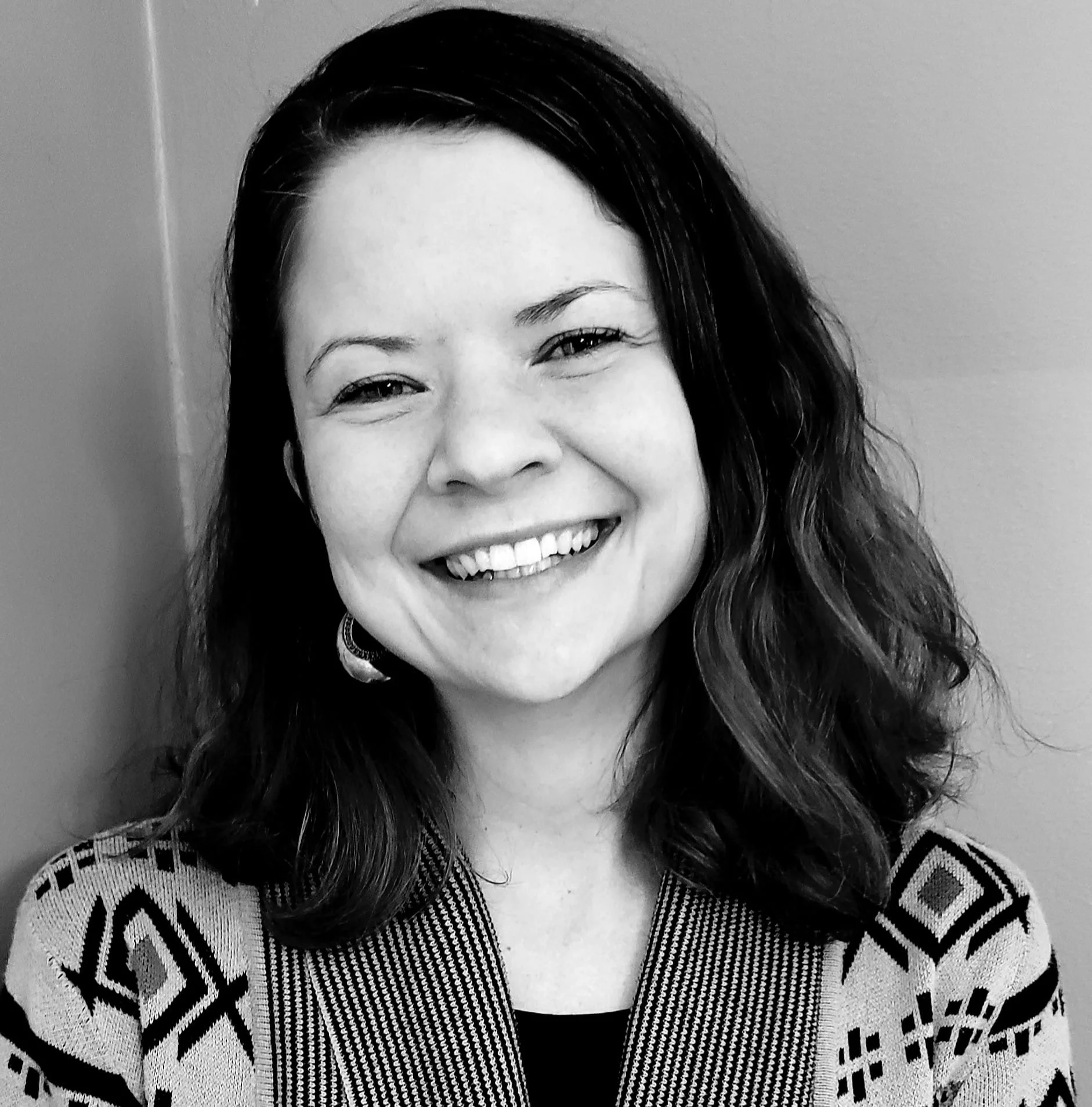
Jenn Hollmeyer is a writer, a painter, and an instructional assistant for a public school district in the Chicago suburbs. Her poetry chapbook, First Grade, about leaving corporate America to work in an elementary school classroom, is now available from Dancing Girl Press. She won the 2019 Katherine Anne Porter Prize in Short Fiction for her story collection, Orders of Protection (University of North Texas Press). She holds an MFA in writing and literature from the Bennington Writing Seminars. Read more at jennhollmeyer.com.