
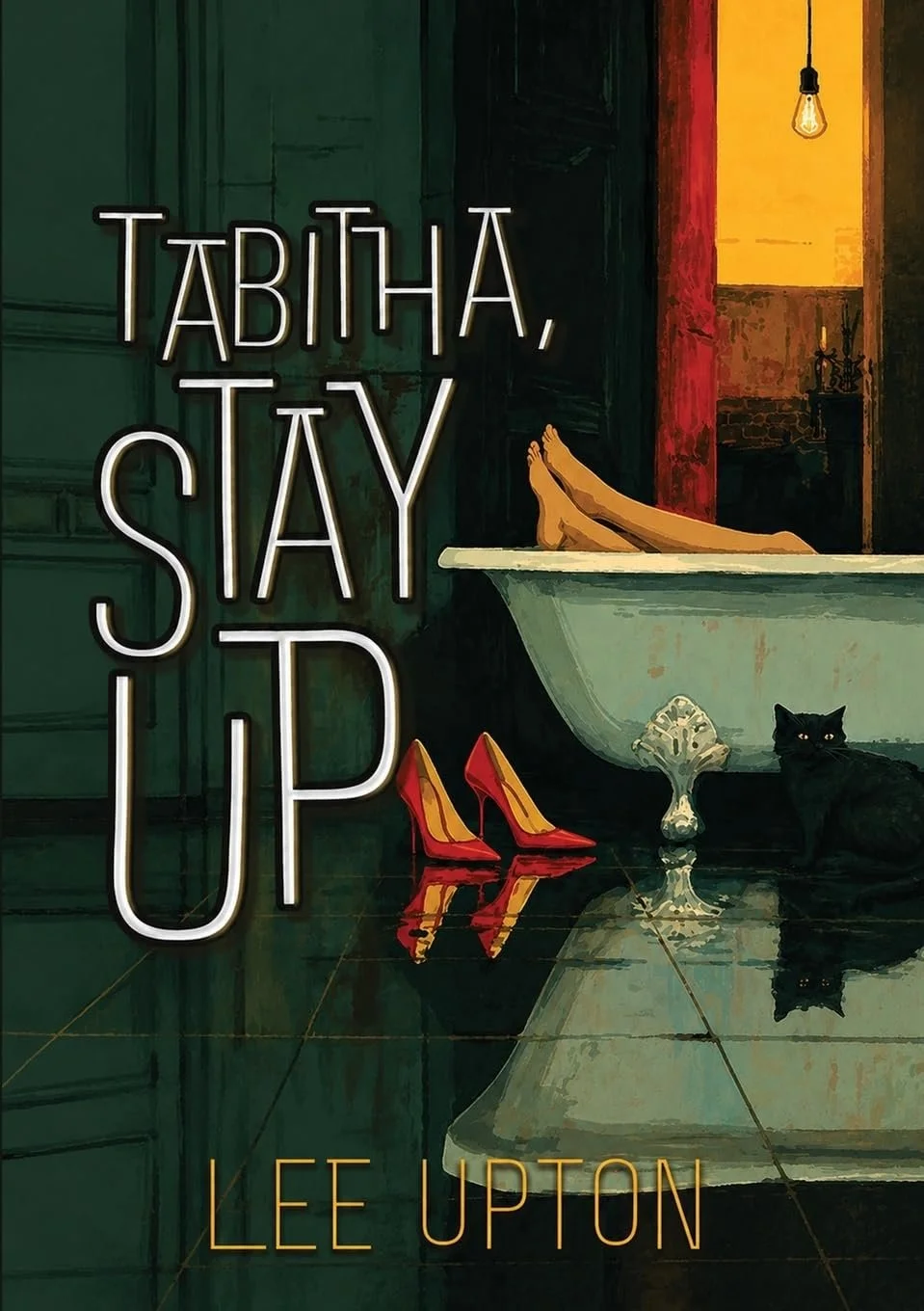
Tabitha, Stay Up
Lee Upton
Sagging Meniscus Press, September 2026
224 pages
Some fictional characters are memorable because of what happens to them. Tabitha is memorable because of how she thinks.
The plot of Tabitha, Stay Up certainly gives its delightfully eccentric protagonist plenty to navigate, but the novel’s greatest pleasure lies elsewhere: inside Tabitha’s endlessly curious, funny, and frequently misguided mind. Reading her observations feels less like following a traditional narrative than borrowing someone else’s way of seeing the world. Every page offers a fresh reminder that ordinary life becomes extraordinary when filtered through an imagination as peculiar as hers.
Although Tabitha, Stay Up stands comfortably on its own, readers who begin with Tabitha, Get Up are rewarded with an even richer understanding of its heroine. The earlier novel introduces Tabitha’s history, insecurities, and wonderfully idiosyncratic habits, many of which return here as familiar companions. Her meticulous notes, her ongoing annoyance with children singing, her collection of Dutch-head statues, her nephew’s beloved bar called The End of the World, and even her habit of classifying voicemail messages as “expected” or “unexpected” become less like recurring jokes than comforting rituals. Revisiting them feels like catching up with an old friend whose quirks have somehow become indispensable.
Tabitha is one of those rare narrators who can be both remarkably observant and spectacularly mistaken. She records conversations with unwavering confidence, presents her interpretations as obvious truths, and then quietly reveals, often without realizing it, that she has misunderstood nearly everything. One character exasperatedly tells her, “Your way of misunderstanding the simplest human interactions—,” a criticism Tabitha naturally rejects. The exchange perfectly captures her charm. She is not unreliable because she intends to deceive readers. She is unreliable because she earnestly believes the version of reality she has assembled.
She documents the world with an almost scientific neutrality, reporting absurdities in the same even tone she uses to describe everyday errands. Even her sharpest observations never feel cruel. A passing remark about chia pets surviving because “bad taste never croaks” lands with perfect deadpan timing. Elsewhere she imagines how much kinder people would be if everyone appeared in public accompanied by a small animal resembling themselves. The humor never strains for attention; it simply emerges from the unusual pathways her thoughts naturally follow.
Yet reducing the novel to its comedy would overlook its quieter achievements. Beneath the wit is a narrator deeply attentive to beauty, language, and the emotional texture of ordinary moments. Autumn leaves become a meditation on surrender rather than decline. A single word can become an object of fascination: “Bubble—such a remarkable word. Say it and your mouth makes a bubble.” These moments reveal the sensibility one might expect from someone who has devoted her life to writing biographies. She is always observing, always translating experience into language, always searching for meaning inside the smallest details.
What ultimately makes Tabitha, Stay Up so rewarding is that its humor and heart never compete with one another. The comedy grows out of Tabitha’s earnest attempts to understand the people around her, while the emotional weight comes from recognizing how difficult that effort can be. She may misunderstand others with remarkable consistency, but she never stops trying to connect with them.
By the novel’s end, readers may find that they have begun seeing the world a little more like Tabitha does. Leaves no longer simply fall; they loosen themselves. Words become tiny marvels. Few novels so thoroughly immerse readers in a singular consciousness, and fewer still make that consciousness feel like such welcome company.

Allison Renner is the author of Green Light: The Gatsby Cycle and Won’t Be By Your Side. Her fiction has appeared in Ghost Parachute, SoFloPoJo, Gooseberry Pie, Roi Faineant, and others. She can be found at allisonrennerwrites.com.