
“Poetic Consciousness“: Ruth Edgett reviews the book of sentences by rob mclennan
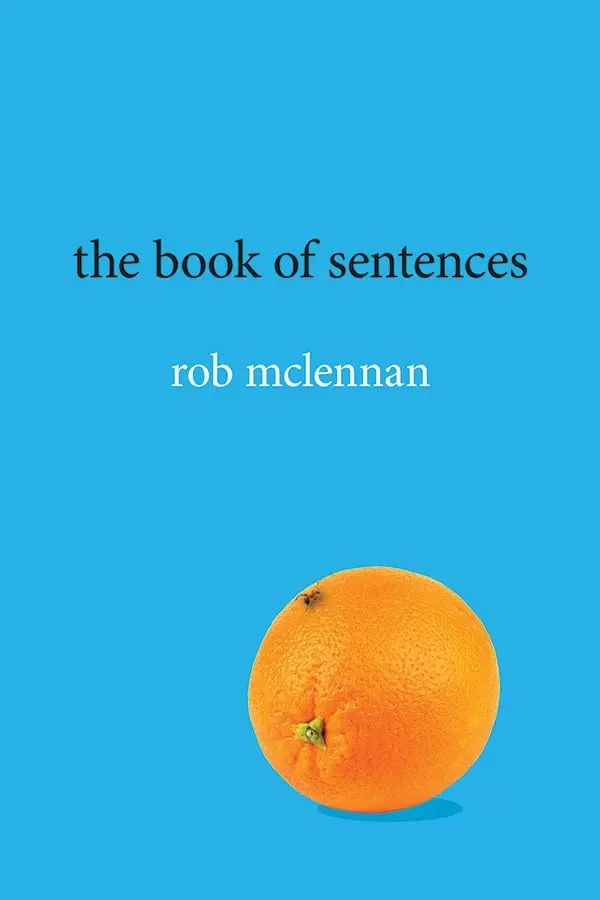
the book of sentences
rob mclennan
University of Calgary Press, 2025
186 pages
“We do not know—neither the sophists, nor the orators, nor the artists, nor I—what the True, the Good, and the Beautiful are. But there is a difference between us: although these people know nothing, they all believe they know something; whereas, I, if I know nothing, at least have no doubts about it.” ~Socrates
Let the above illustrate the position from which this review of rob mclennan’s the book of sentences comes. The reviewer makes no pretense at being an authority on the poetic form in general, nor on the poetry of rob mclennan in particular; but like any writer intent on improving her craft, she’s up for the challenge.
Certainly mclennan (who styles his name, and his book, without capitalization) has established his literary bona fides. On the author page of his blog, he claims authorship of 149 chapbooks, four books of fiction and one of nonfiction. This over the course of a multi-decade career during which he’s also published more than 20 full-length books of poetry, a host of individual poems, reviews and other stories, as well as maintaining both blog and Substack, together with his own chapbook imprint, above/ground press (again, styled in lower case), which he founded in 1993.
mclennan asks his readers to trust him as he loosely weaves snippets of his solitary childhood on a farm near Canada’s capital city of Ottawa together with his married-with-children life in Ottawa during the Covid-19 pandemic, through his father’s steadily deteriorating health and eventual death. He asks us to follow him through the tumult of his artistry and out the other side.
It’s been said prose writers write for everyone, but poets write for other poets. If this is true, the book of sentences is part of the proof. If you’re not a follower of mclennan, or among the many poets-of-all-ages-and-stages with whom he shares community, your first reaction (ironically) to the book of sentences may well be, “These are not sentences.”
What they appear to be, is fragments, nonetheless punctuated by periods, commas and semi-colons. But the collections of words between those grammatical signals often don’t amount to complete thoughts in a way ordinary folks recognize. Besides this obstacle to the uninitiated are copious caesuras of varying lengths within the lines, meant for emphasis or to allow pauses that might cause the reader to reflect on the words they’ve just been given. To the unschooled eye, though, repetition of this kind of seeming affectation can be annoying. Add to this periods, semicolons or commas standing on their own, orphaned from the words or clauses one would expect them to pair with.
Possibly, there are poets who will read this and call into question the reviewer’s qualifications. Which, of course, goes toward proving the earlier point.
All that said, for those who wish to make a study of it, the book of sentences is best read aloud. You need to hear the patter of syllables, the pauses in the caesuras and line breaks. And the hidden rhyme. You need to apply yourself.
In some ways, mclennan’s writing is reminiscent of American poet e. e. cummings (1894-1962), lower-case spelling of names being the most obvious. Like cummings, mclennan eschews unnecessary verbiage and sets his own rules for punctuation and form. But, where the two plainly differ is in development of their styles. cummings was criticized in later years for not developing as a poet; whereas, mclennan’s books are all about his own growth within the craft; experimenting in what he can do with words, the space on the page, and what new artifice he can employ to bring forth images and emotions not necessarily spelled out in words.
In his extended biography, mclennan explains his penchant for pushing the poetic envelope: “I write to clarify; to understand from a different angle, a slightly altered perspective. To better understand my space, and my surroundings. Language. The world in which I write. I wish to understand. I write.”
But there are times in the book of sentences when the reader may wonder where the clarity resides—how to enter the story that mclennan gradually weaves in snips and half-articulated lines. For those unschooled in this minimalist and experimental style of writing, the book demands the kind of patience and persistence the author himself says he learned early in life. For the aspiring poet, the book of sentences and others in mclennan’s canon are important as examples of the infinite possibilities that poetry opens up for both writer and reader. For both, it serves as a jolt to the poetic consciousness and a challenge to reach farther.
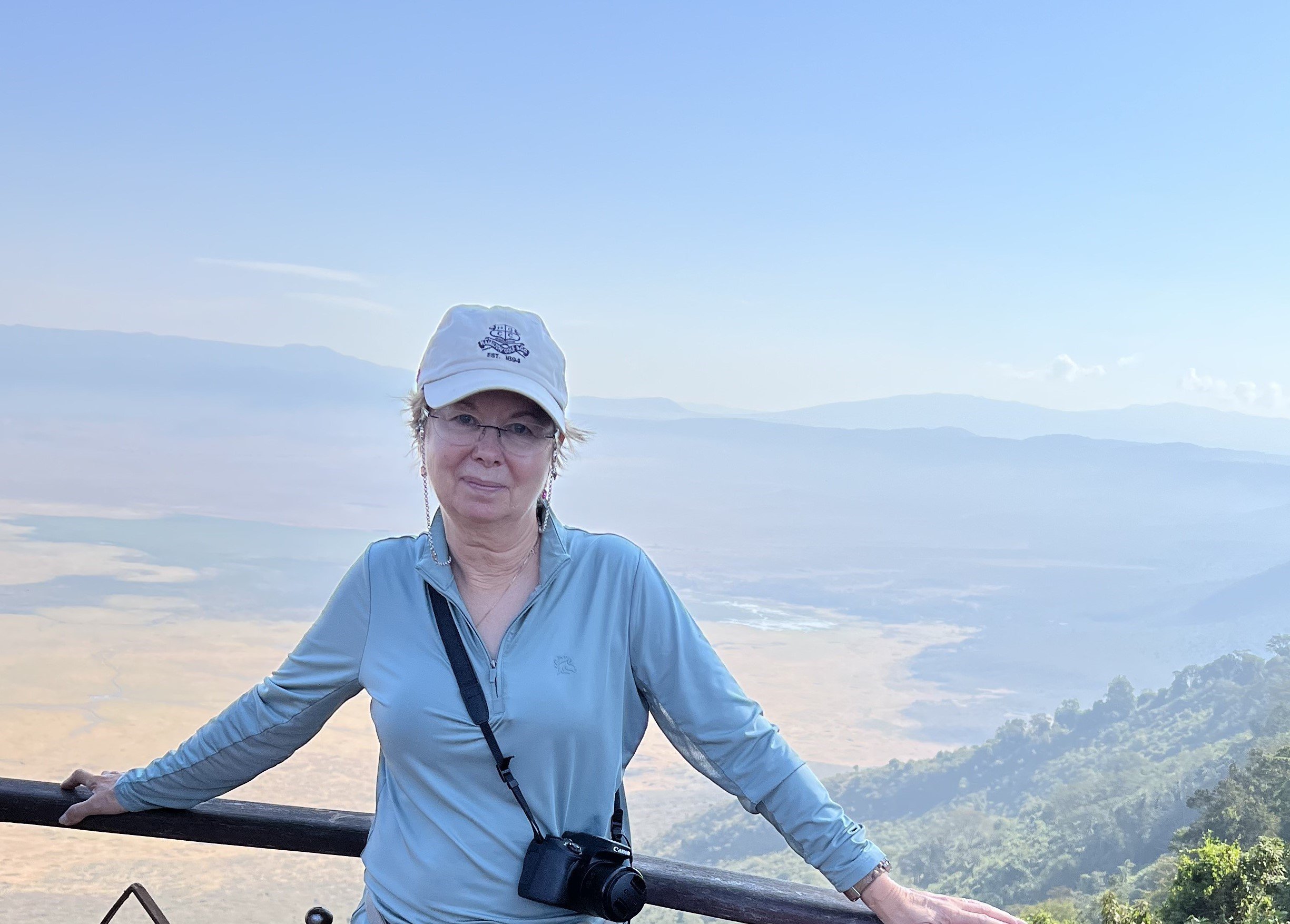
A Prince Edward Islander by birth and upbringing, Ruth Edgett is a former print journalist and prize-winning short story writer with fiction and non-fiction published and forthcoming in books, magazines and journals based in Canada, the U.S. and the U.K. She is the author of A Watch in the Night: The story of Pomquet Island’s last lightkeeping family (Nimbus, 2007), a narrative non-fiction book about her mother’s family. A novelist in waiting, Ruth is seeking a home for one manuscript and is writing a second. She holds a BA in Philosophy from the University of Prince Edward Island and an MS in Communications Management from the S.I. Newhouse School of Public Communication at Syracuse University. She makes her home at the foot of the ecologically significant Niagara Escarpment in the beautiful Dundas Valley of Ontario, Canada.
“What I love about reviewing books is how much I learn—not simply from what the authors have written, but from researching the techniques, influences and ideas that inform their writing. All of this makes me a better writer.”